
THE SIDEL CREN BLOG
The questions behind
The questions behind
the wasted heat.
Plain-English answers for plant, energy and facility teams. No hype, sources linked, and no savings numbers we can't back up.
Plain-English answers for plant, energy and facility teams. No hype, sources linked, and no savings numbers we can't back up.

A PCM battery stores heat as latent heat and releases it at a steady temperature. How it works, where it fits in a plant, and the limits to check first.
Read the answer →
Sugar mills burn their own bagasse, so saved steam becomes surplus power. Where the steam goes, the steam-on-cane yardstick, and where mills find savings.
Read the answer →
Cooling towers lose water through evaporation, blowdown and drift. How to cut it with better cycles of concentration, and why a lower heat load helps most.
Read the answer →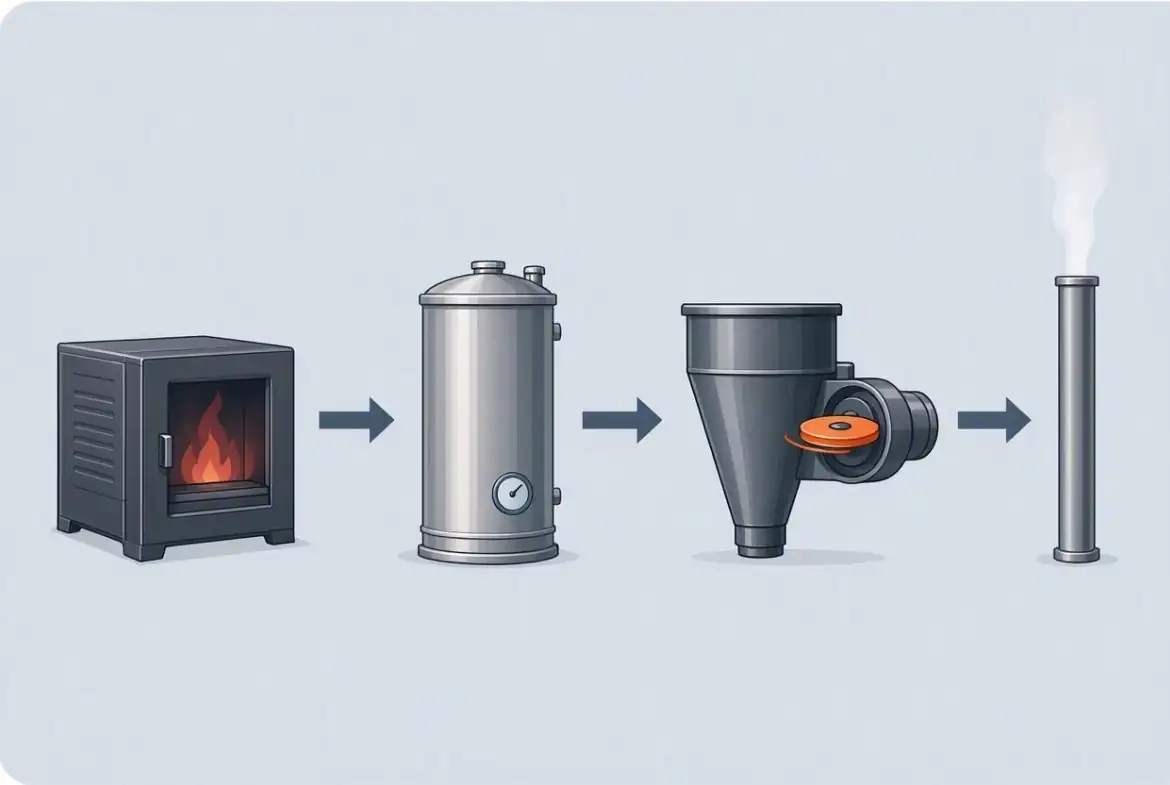
Three ways to take dust out of flue gas, each with a different weak spot. How each works, where each struggles, and the questions that decide the right fit.
Read the answer →
Stack loss is usually a boiler's single biggest energy loss. How to estimate it from your stack temperature, why the water vapour matters, and what actually recovers it.
Read the answer →A standard economizer stops around 250°F. A condensing economizer goes below the dew point to recover latent heat and water. How they differ, and what you need for one to work.
Read the answer →
Almost every watt a data center draws ends up as heat. Where that heat can go, why liquid cooling changes the math, and the practical problems every heat-reuse project has to solve.
Read the answer →Yes, with an Organic Rankine Cycle. How ORC turbines work, what efficiency to realistically expect at different temperatures, and when making power from waste heat makes sense.
Read the answer →Looking for a quick answer? The FAQ covers 16 common questions in a paragraph each.