After the heat is harvested and the power is generated, what remains — cleaned CO₂ and water vapor — is exactly what a greenhouse wants. The stack runs clean, and the community eats year-round.
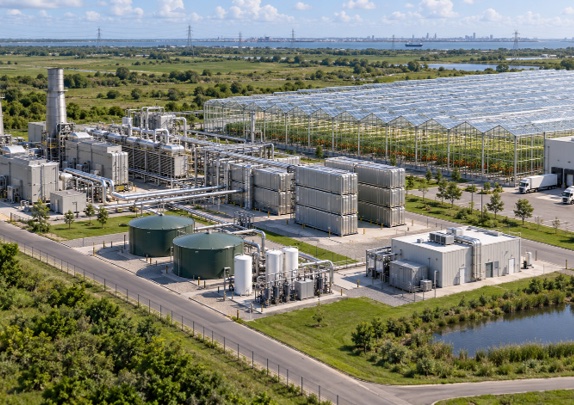
greenhouse campus modeled beside a representative coal plant
CO₂+H₂O
cleaned exhaust streams routed to the greenhouse instead of the sky
365
days a year of local food production, whatever the climate
How it works
A greenhouse is the perfect customer for a clean stack.
Plants grow faster with supplemental CO₂, steady warmth, and water. The Sidel CREN chain produces all three as by-products: the SRU condenses clean water, the storage stage delivers steady low-grade heat, and the cleaned exhaust supplies CO₂ enrichment. What used to be a compliance problem becomes the anchor of a local food economy.
🥬
Local Food Security
Fresh produce grown beside industrial communities — not trucked in from another hemisphere.
👷
Jobs & Training
Greenhouse operations create employment, training, and agricultural entrepreneurship.
🏛️
A Visible ESG Story
Utilities, regulators, and host communities see the benefit with their own eyes — clear stacks and green rows.
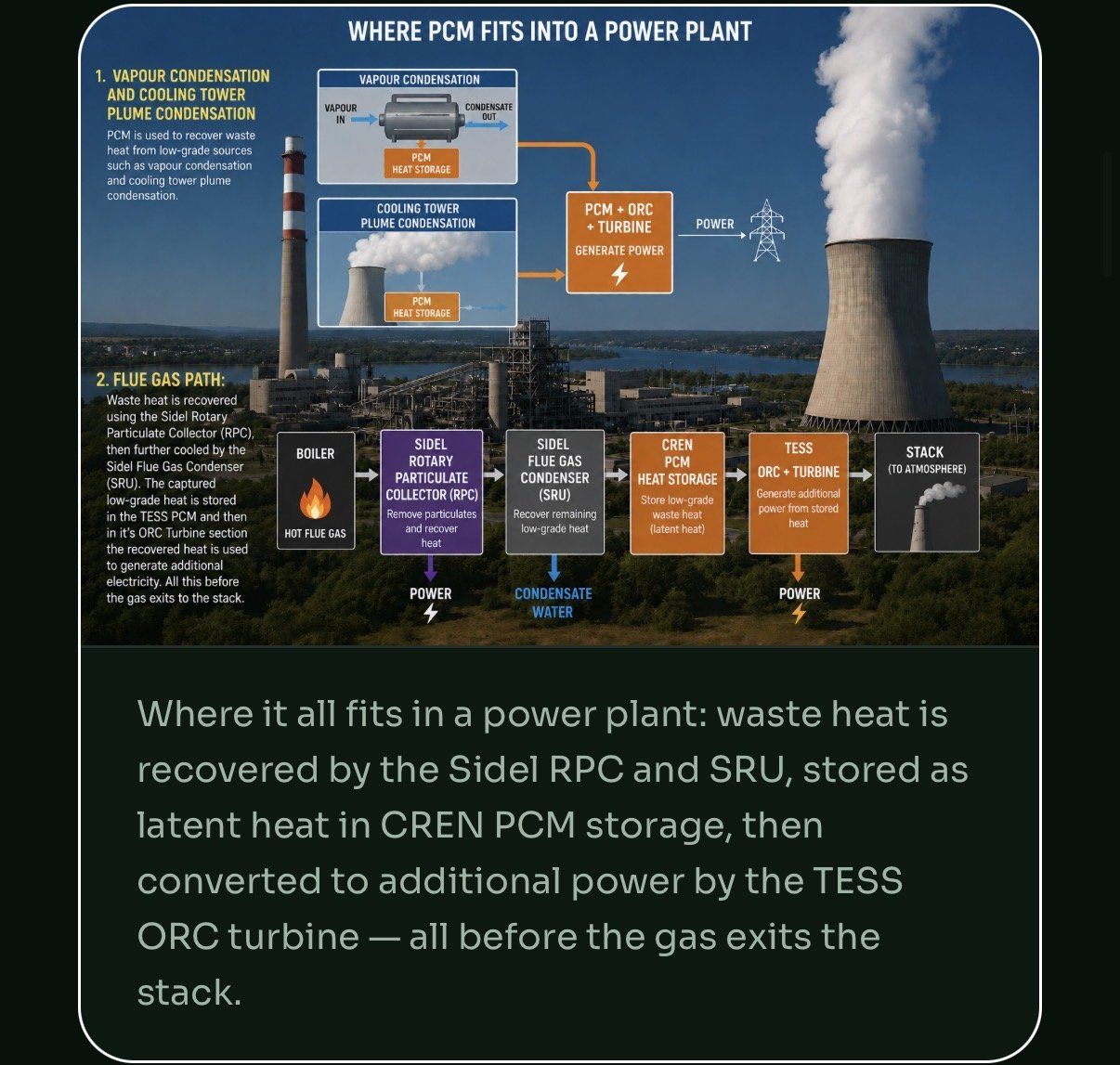
Where PCM fits into the plant: low-grade heat from vapour condensation, cooling tower plumes, and the flue gas path (RPC → SRU → PCM storage → TESS ORC turbine) is captured and converted to power before the stack — with the greenhouse drawing on the same clean heat and CO2.
Texas concepts · energy + agriculture
Power and produce, side by side.
A 100 MW gas plant with SRU + TESS can link its recovered energy to a greenhouse campus next door. Useful heat, treated condensate and conditioned CO₂ go into crop production. Packing jobs and short trips to produce markets add community value. We have developed two Texas concepts: a 20-acre greenhouse near Houston, and a West Texas food-energy campus that combines a 10-acre greenhouse with food processing and refrigerated logistics.
Gas plant + SRU + TESS beside a greenhouse campus: recovered heat, treated condensate and conditioned CO₂ serve crop production. Concept illustration, not a measured equipment layout.
Measure
A · Houston region
B · West Texas
Greenhouse area
20 acres
10 acres + processing & cold chain
Produce sales / year
$6.5–17.4M
$3.3–8.7M
Ag / logistics investment
$30.5–56.6M
$30.2–58.3M
Ag / logistics direct jobs
80–120
65–105
Including power-plant jobs
100–155
85–140
Planning basis
Yield of 6–10 lb/ft²/year at a farm-gate price of $1.25–2.00/lb. This is not a crop-profit forecast, and West Texas cold-chain revenue is not priced. A complete gas + agriculture campus is estimated at $267–426M, which supports ~670–1,065 construction job-years and ~$53–149M in regional procurement. Designs must handle Texas summer cooling and dehumidification. No site, crop offtake or owner commitment is assumed.
CO₂ reuse is a co-benefit, not carbon removal
A 20-acre greenhouse uses about 1,940 tonnes of CO₂ a year. A 100 MW gas plant emits about 300,000 tonnes a year, even after fuel savings, so the greenhouse takes less than 0.7% of the stream. Crop use is temporary, not permanent storage. Condensate and CO₂ supply are analyzed and treated, and crops are isolated automatically if quality fails.
The complete picture
Community-scale power, built for pride.
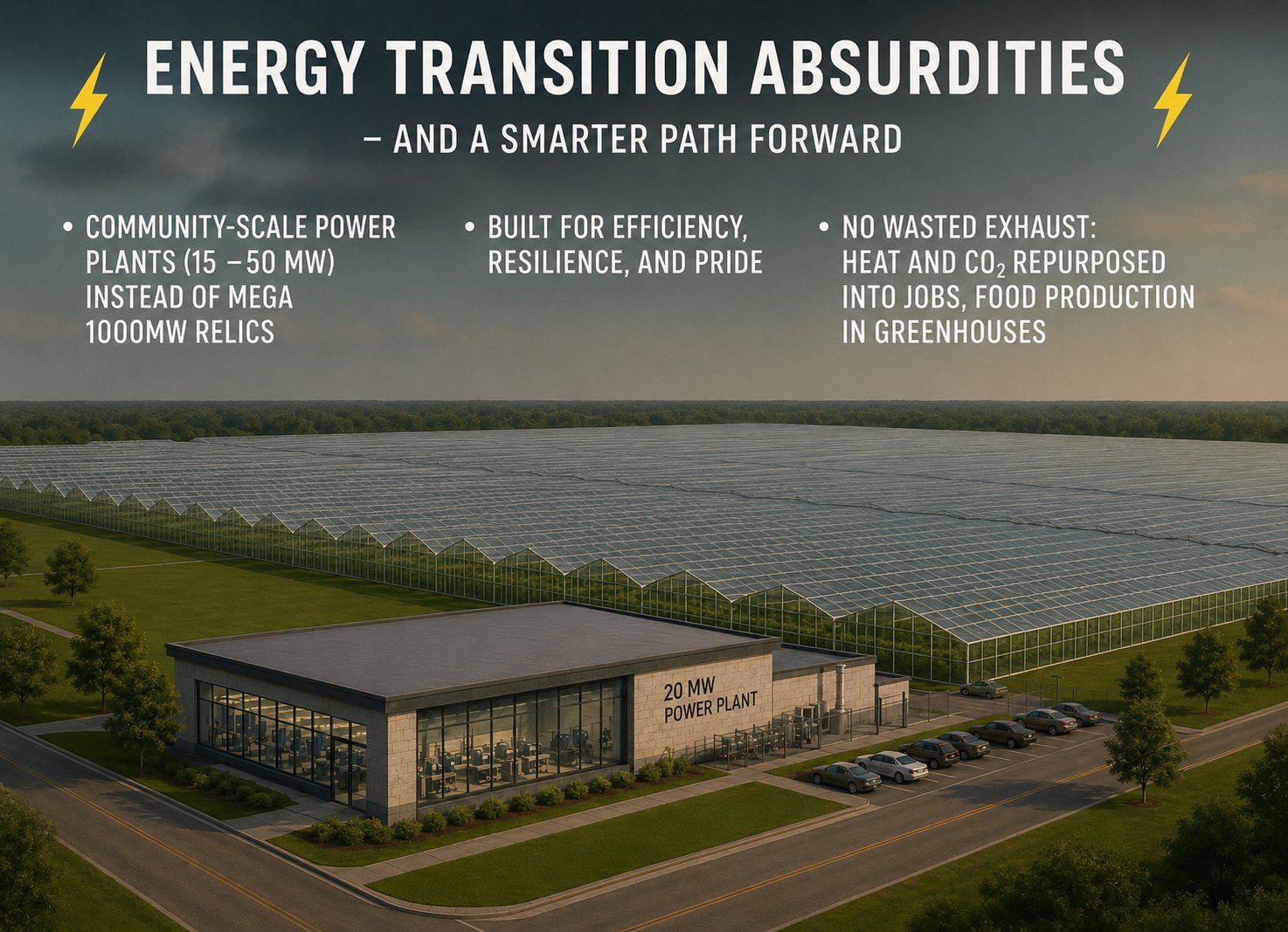
The end-state vision: community-scale power plants (15–50 MW) built for efficiency and resilience — where nothing is wasted, heat and CO₂ are repurposed into jobs and food, and the neighbours are glad the plant is there.
That's the whole chain
Capture. Store. Reuse. Convert.
Five stages, three proven technologies, one accountable platform — delivered through a metered, pilot-first process that proves the savings before anyone scales.