A patented, self-cleaning particulate collector that pulls fine dust, smoke and airborne contaminants out of flue gas — while recovering the heat — with a single rotating collection unit.
Particulate collection falls into three families, and the industry settled its consensus decades ago.
Uses centrifugal and centripetal force — repeated bends, or cyclonic spin in tubes designed to throw entrained particles to the periphery. Fine for medium and non-critical cases.
The default choice today for critical collection. Ionic charge attraction drags particles to the collection zones — at the cost of high voltage, plates, rappers, footprint and maintenance.
The most elementary and the most reliable principle: a screen traps anything larger than its apertures. It was never scaled to critical flows for two reasons — clogging and pressure drop.
A unique self-cleaning mechanism built into every RPC keeps the screen face 100% clear and unfouled at every instant of flow — the clogging problem, removed.
The pressure-drop problem was solved with borrowed history. The design applies the classically established and validated equations developed for steam locomotive chimneys and bonnets — a real engineering problem that occupied railway engineers for over a century. Taller stacks draught better, but tunnel heights capped stack height, and short stacks cost many locomotives half their power to blast-pipe back pressure. Those hard-won solutions were adapted and refined for the RPC.
Better still, the RPC's cleaning mechanism creates an internal negative draft while it cleans — adding a vacuum effect that helps overcome the barrier drop entirely.
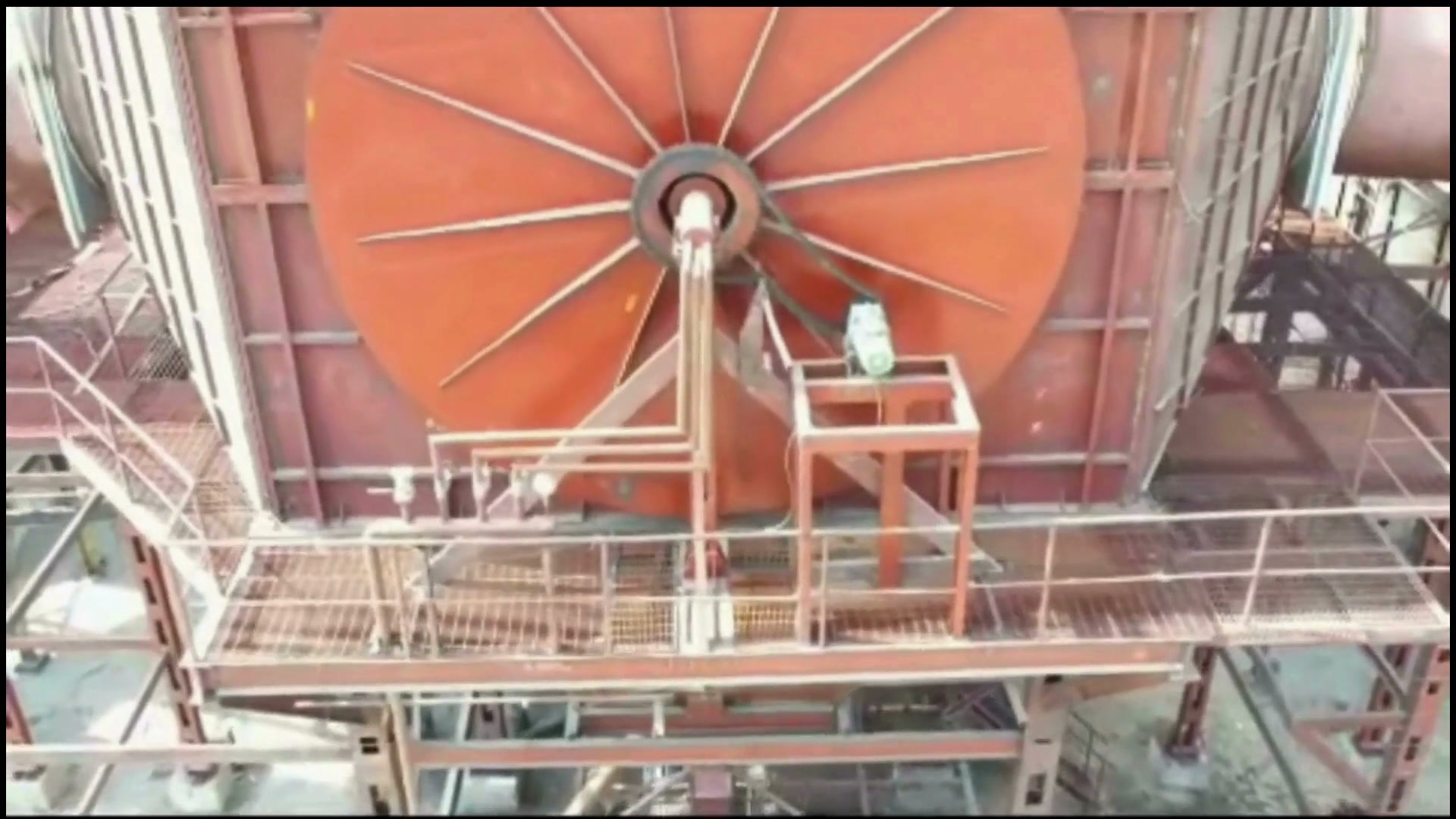
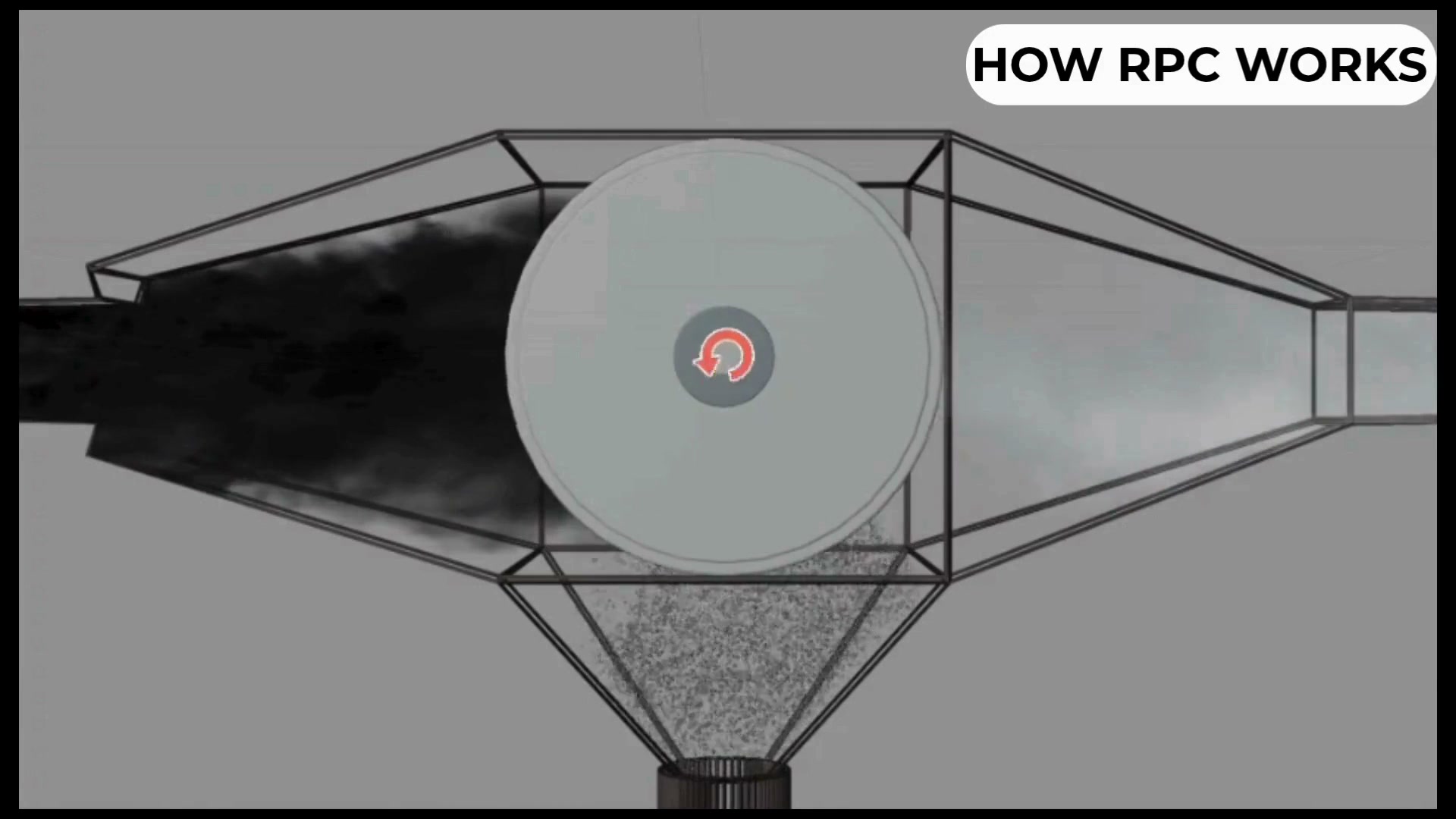
Highest collection efficiency, lowest pressure drop, smallest footprint, and the lowest capex and opex of the options — which is what makes a barrier-based collector a genuine contender to replace the ESP in most applications. Detailed design descriptions are withheld under proprietary technology and intellectual property protections.
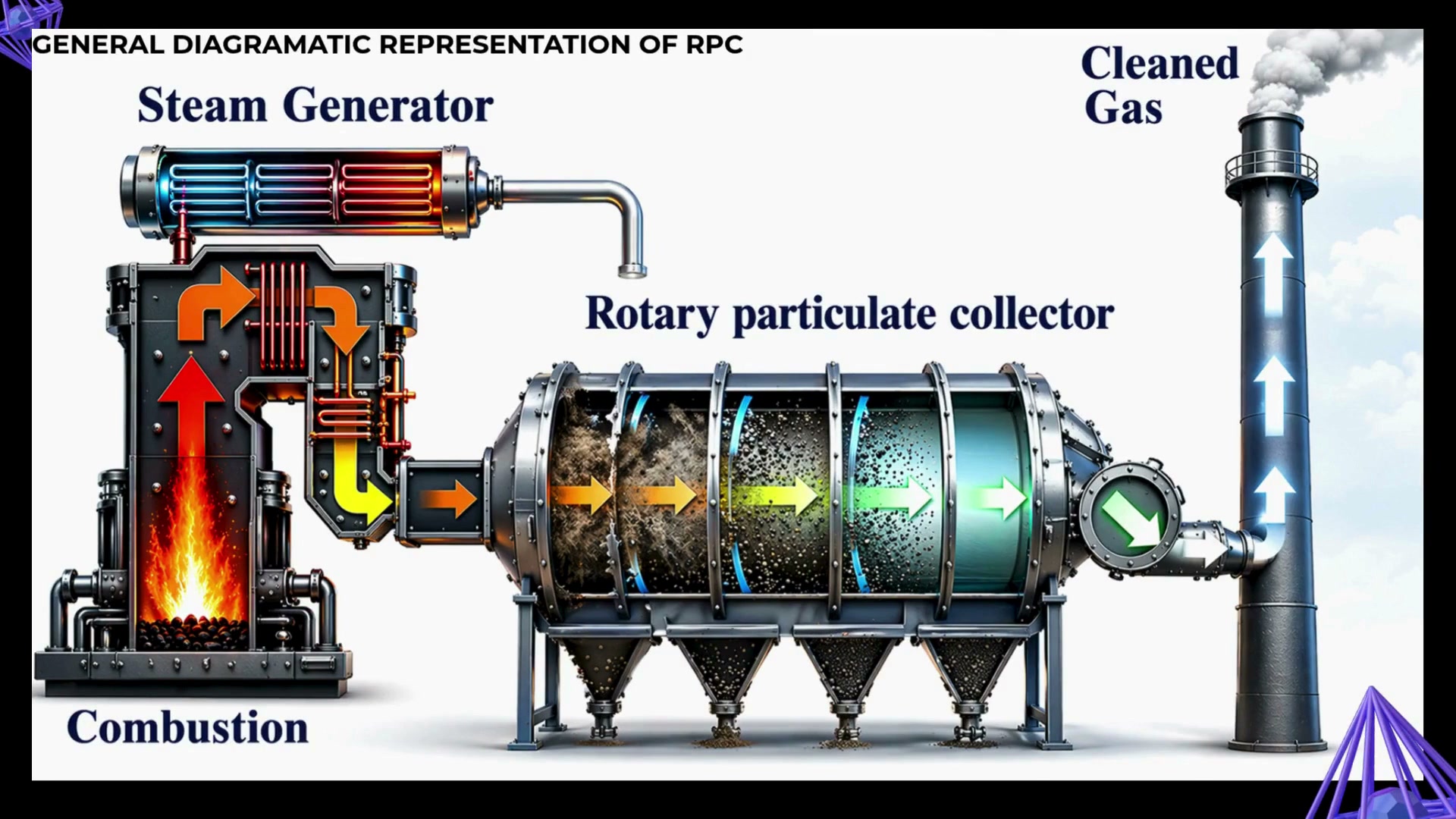
Flue gas from the boiler enters the collector housing. A rotating collection disc — variable in movement, speed and displacement — intercepts entrained particles of any size or distribution, self-adjusting to the volume of flow. Collected ash drops into hoppers below and is discharged partially wet, so nothing scatters in the wind.

In lieu of flat plates, rappers and electrodes — the failure points of conventional electrostatic precipitators — the RPC uses a single connection unit, suitably sized through Sidel Systems' proprietary design.
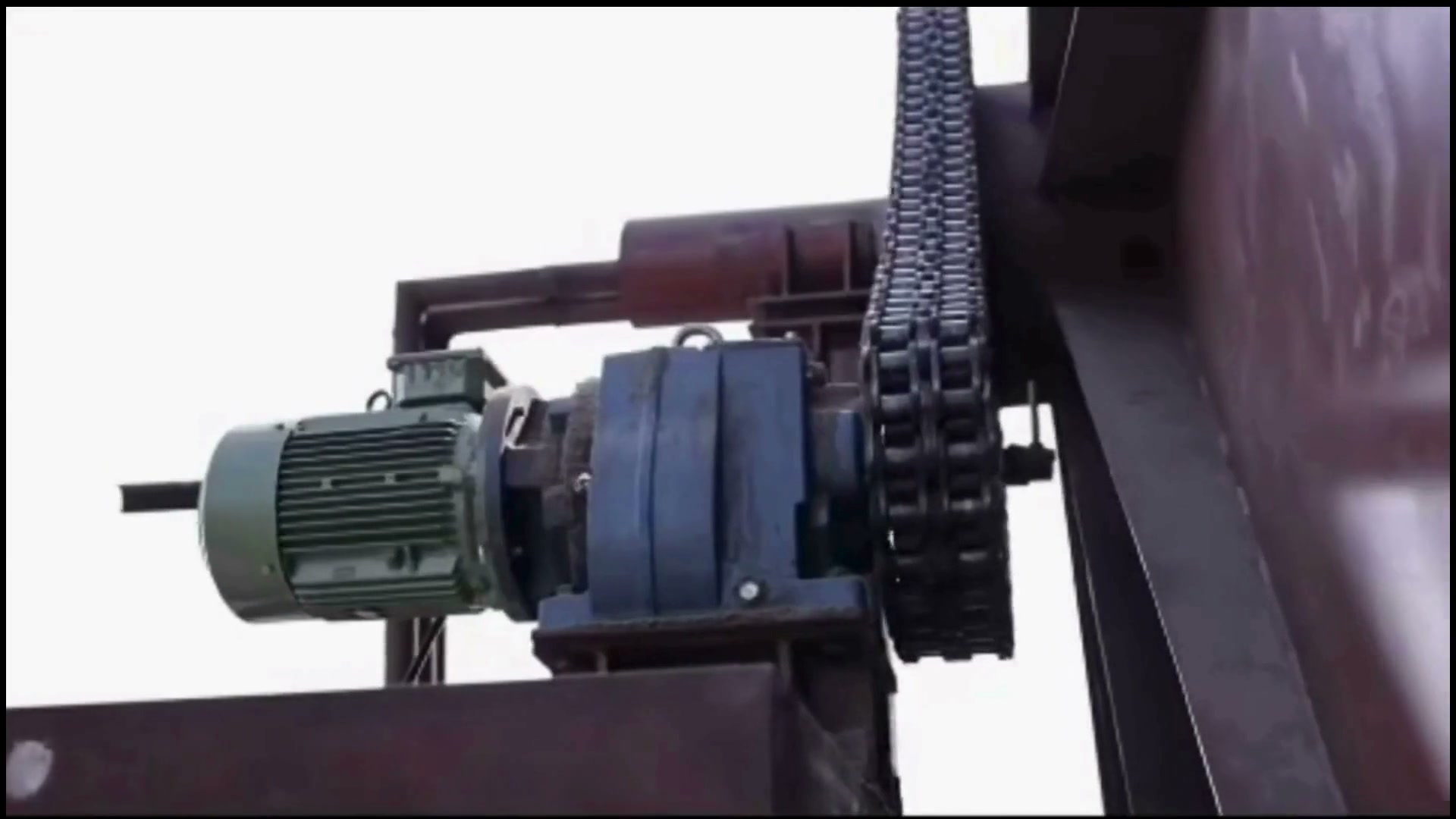
The collector plate system is self-cleaning, powered by an external, easily accessible electrical drive. Low pressure drop means lower fan energy and lower operating cost.
Control and monitoring systems come preprogrammed for automatic or manual operation. Data streams in real time — collection rates, gas flow, power consumption — with controls that adjust automatically.
That telemetry can be sent to any website of choice, or straight to the smartphones of your operations personnel. The whole assembly ships as a fully assembled package — minimal site setup, corrosion-resistant construction, guaranteed durability, with man-ways, platforms and ladders built in for easy maintenance.

Reference specification for a single collector unit. Sizing, materials and terminal points are confirmed per site during engineering.
| Collection efficiency | 99.8% |
| Particle size handled | 0.1 micron |
| Maximum quantity collected | 1,000 mg/Nm³ |
| Resistivity of particles handled | Not applicable — no charge dependency |
| Maximum flue-gas flow capacity | 138,050 Nm³/hour |
| Turndown without loss of collection efficiency | 10% of maximum normal operating flow |
| Pressure drop across the collector | 0.5″ WC |
| Power required for drives | 1 HP |
| Water required for operation | 100 litres/hour |
| Instrumentation & control power | Supplied at site local voltage |
| Equipment footprint | 10 m × 6 m × 4 m |
Ash and particulate discharge to the client's receptacle, conveyor or pit below the hoppers · ducting to the collector inlet's mating flange and from the outlet to the chimney's mating flange · electrical connection to the client's terminal box.
Captures fine dust, pollen and smoke across any particle size or distribution.
Automated, continuous maintenance — no shutdown-and-rap cycles.
Low pressure drop = lower fan costs, and recovered heat feeds the rest of the system.
External, accessible drive; corrosion-resistant everything; ships fully assembled.
Fewer mishap and explosion risks than high-voltage electrostatic precipitators.
Compact footprint and modular sheet-metal housing with flanged duct connections.
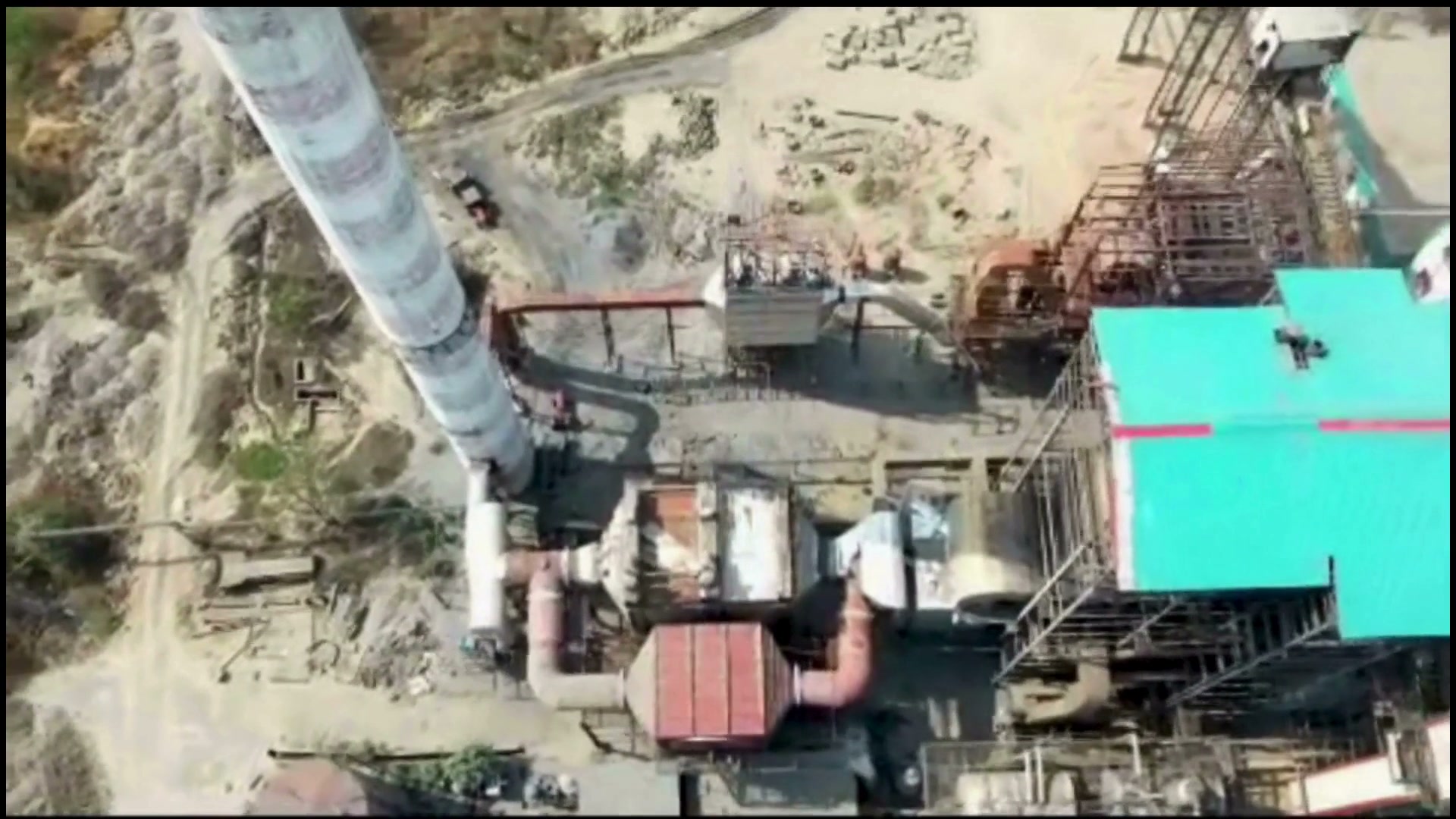
Installed at a leading sugar producer in Maharashtra on a 75 TPH boiler co-generation plant — cutting emissions from 150 to 32 Mg/Nm³ with a single RPC as fourth-generation pollution control equipment. Designed by Parthosarothy "Partho" Mukharji.

Both coarse and fine ash are collected via the hopper system with rotary air-lock valves preventing air ingress. Discharged partially wet, the material stays put and is easy to handle.
Recovered particulate can be evaluated for fertilizer reuse — turning a disposal problem into a by-product with value.
Operators applauded the results: "Happy to note an excellent performance… clear smoke from the chimney." — sugar industry technocrats, Maharashtra