INDUSTRY 05 · Waste Heat Recovery for Data Centers
Data center waste heat recovery.
The fastest-growing electricity load in the country — cooling alone can be up to 80% of non-compute power draw, and liquid cooling is finally making that heat recoverable.
Industry 05 · Data Centers
Data centers: the fastest-growing thermal load in the country.
Nearly every kilowatt-hour a data center draws eventually becomes heat. Lawrence Berkeley National Laboratory puts U.S. data-center electricity use at 176 TWh in 2023, with a 2030 reference case as high as 649 TWh. Cooling alone can account for up to 80% of everything beyond the compute load itself. As liquid and two-phase cooling push exit temperatures above 122°F, that heat stops being waste and becomes recoverable.
Planning basis
Reference value
What it implies
U.S. market scale
176 TWh of data-center electricity in 2023 (LBNL), trending toward a 2030 reference case near 649 TWh
A genuinely national-scale thermal resource, not a niche application.
Cooling share of load
Industry-average PUE ~1.4; cooling reaching up to 80% of non-compute load, and 33–40% of total site electricity at some facilities (DOE)
Cooling electricity is the single largest controllable value stream in most sites.
This is the same threshold TESS is built to capture across every Sidel CREN application.
Water exposure
Evaporative cooling towers remain common at scale
Sites in water-stressed or permitting-sensitive regions carry real water-reduction upside.
Where TESS fits in a data center
Waste area
How the waste happens today
Technology response
Chiller & cooling-tower load
Compressor work, tower fan/pump duty and dry-cooler operation run continuously to reject heat the moment it's produced.
TESS intercepts heat before final rejection, buffering it and cutting chiller/tower run time.
Evaporative water use
Cooling towers consume significant makeup water, especially in warm or dry climates.
Time-shifting and reducing tower duty lowers evaporative water demand directly.
Power-envelope limits
Sites with constrained grid interconnection can't add compute even when cooling capacity nominally allows it.
Every MW of cooling load avoided can be reassigned to revenue-generating compute within the same interconnection.
Outage & resilience risk
Backup relies on diesel generation and battery UPS alone.
TESS thermal storage can support black-start and critical-load backup functions where engineered for that duty.
Stranded low-grade heat
Liquid-loop return heat above 122°F is rejected rather than reused or converted.
Where temperature and site conditions support it, TESS + ORC converts a portion to behind-the-meter power.
Data centers — first pilot
Best fit: AI/HPC campuses running direct-to-chip or immersion cooling with return temperatures approaching or exceeding 122°F, especially where interconnection, water, or electricity cost is a binding constraint. Start with an instrumentation audit — liquid-loop temperatures and flow, chiller/tower kW, IT load, and water balance — then a 1–2 unit pilot to measure actual cooling-kWh displacement, water displacement and net output before any site-wide commitment.
Webinar: data center waste heat recovery
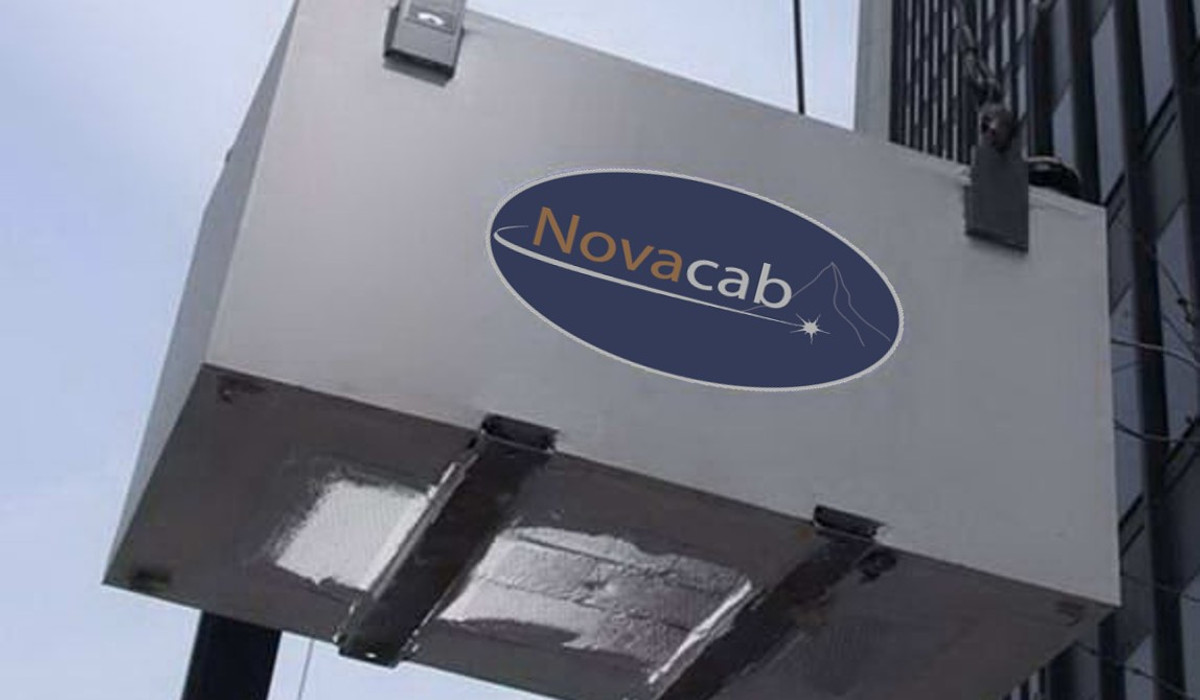
A conversation with Dr. Stephane Bilodeau, inventor of Novacab TESS, and Michael Logan, President & Chairman of Sidel CREN, on applying waste heat recovery to data center cooling loops.
Before we quote anything
The data we ask for — data centers.
We would rather send you a data request than a brochure. This is what turns a conversation into a bankable project.
Liquid-loop supply/return temperature and flow; PUE components and IT load; chiller, tower, pump and fan kW; cooling architecture (air, liquid, immersion); makeup water and blowdown; electricity tariff and demand charges; interconnection headroom; SLA and redundancy requirements.
Validation boundary
All claims relating to site savings, water reduction, output increase, emissions outcomes, payback, incentives and deployment economics are planning assumptions, analogues or prior-project references — unless and until they are validated for your specific facility through engineering, measurement, vendor quotation, financing documentation, legal review and final commercial agreements.